
Last updated: October 25, 2026
Quick Answer: You can track U.S. cybersecurity breaches in the tech sector with one repeatable workflow: monitor SEC filings, CISA alerts, and company disclosure pages, then log the first public date, update date, and impact in one record.
How to Track U.S. Cybersecurity Breaches in the Tech Sector works best when you follow disclosure trails, not headlines. The useful question is not “what got hacked?” but “what was disclosed, when, by whom, and under what rules?” That turns scattered alerts into a working view of incident reporting, breach disclosure, and ransomware trends.
Key takeaways
- A practical way to monitor U.S. cybersecurity breaches is to combine disclosure feeds, agency alerts, and company filings.
- A single incident can appear first as a vendor notice, then as a SEC filing, then later in a data breach report or enforcement action.
- Timing matters: some disclosures land within days, others after a 4-day SEC clock or a much longer investigation.
- Vendor risk is part of breach tracking, not a separate topic; a supplier incident can expose a tech company even when its own systems were not the first target.
- A repeatable workflow is more reliable than a one-time news search.
What counts as a U.S. cybersecurity breach in tech?
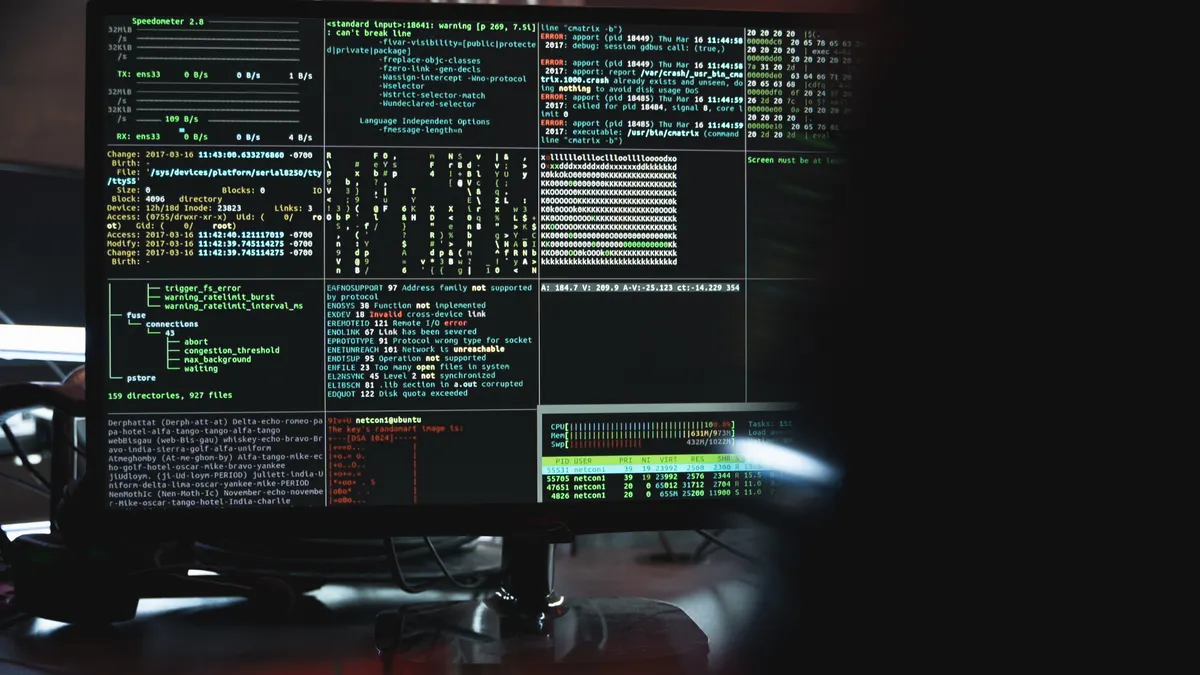
A U.S. cybersecurity breach in tech is any confirmed unauthorized access, data exposure, or operational compromise that affects a tech company, its customers, or its supply chain. That includes ransomware, stolen credentials, cloud misconfiguration, source-code theft, and third-party compromise, even when the company avoids using the word “breach” in the first disclosure.
This matters because many public reports use softer language first. A company may announce “a security incident,” “service disruption,” or “limited unauthorized access” before it gives a fuller account. For tracking purposes, I treat those as candidate breach events until the facts narrow down; if you are using them in a decision-making, legal, or compliance setting, consult a qualified professional and verify the facts against the original disclosure. That approach catches issues that would be missed by a strict search for the word breach.
The tech sector also has a wider footprint than software vendors alone. It includes cloud providers, cybersecurity firms, chip designers, IT services companies, marketplace platforms, and infrastructure software. A compromise at one of those firms can ripple into many customers, which is why vendor risk belongs in the same tracking file.
The cleanest way to sort incidents is by type:
- Data breach: personal data, customer records, or internal files are exposed.
- Operational intrusion: systems are accessed or disrupted, but the data impact is unclear.
- Ransomware: files are encrypted, stolen, or both, with extortion demands attached.
- Supply-chain incident: a vendor, updater, or service provider becomes the entry point.
- Credential abuse: valid logins are used in a way the company did not authorize.
A generic news roundup often blurs those categories. That makes trend reading sloppy. If the event is really a vendor compromise, do not file it as a stand-alone company breach and move on. The point is to understand exposure paths, not just count headlines.
For a broader industry context, the hub on U.S. tech voice is the right place to start before drilling into individual incidents.
Where do the most reliable breach disclosures show up first in tech-sector monitoring?
The most reliable early disclosures usually show up in company filings, incident notices, and government or industry alert channels before they are summarized in mainstream coverage. For U.S. cybersecurity breaches, that means checking the SEC, CISA, CERT, and company-specific disclosure pages in that order or in parallel. The SEC’s EDGAR system and CISA’s alerts are the most useful starting points for public-company monitoring. SEC EDGAR | CISA Alerts
A useful mistake to avoid is relying on a single news story. News coverage is fast, but it is not the source of record. If you need to know whether an incident is real, when it was first disclosed, and what changed afterward, you need the disclosure trail.
The main places to monitor are:
- SEC filings and company investor pages. Public companies often disclose material incidents in 8-Ks or related filings. For tech-sector tracking, these are essential because they provide dates, risk language, and sometimes the first confirmed timeline. The SEC’s EDGAR system is the practical starting point.
- CISA alerts and advisories. CISA publishes warnings, known exploited vulnerability information, and guidance that can help you connect a breach to the exploit path. Its alerts are especially helpful when a campaign targets many firms at once.
- CERT coordination notices. CERT-related channels, including vendor and national coordination notices, often surface technical details that do not appear in press releases.
- Company security blogs and trust centers. Many tech firms post incident updates there before investor materials catch up.
- State breach notification pages and attorney general notices. These can confirm consumer- or resident-facing disclosure, though the timing can lag the initial event.
- Reputable incident trackers and data breach reports. These help with cross-checking, but they should not be treated as primary proof by themselves; compare them with filings, notices, and agency guidance before drawing conclusions. For regulated disclosures, review the SEC’s cybersecurity disclosure rules and the CISA alerts page. SEC cybersecurity disclosure rules | CISA alerts
There is a trade-off here. Primary disclosures are slower to read and harder to compare, but they are far more trustworthy than social posts or aggregator summaries. If you only watch for headlines, you will miss the quiet incidents and overcount the loud ones.
A practical workflow is to save the disclosure page, the press statement, and the first filing together. That gives you the event date, disclosure date, and the organization’s own wording in one place.
How do I track U.S. cybersecurity breaches step by step?

You track U.S. cybersecurity breaches by building a source list, logging each disclosure date, and then reconciling the incident across SEC filings, CISA notices, and vendor statements. The result should be a single incident record that tells you what happened, who said it first, and how the story changed over 24 hours, 7 days, or 30 days.
- Start with a watchlist of 20 to 50 tech-sector entities. Include cloud providers, software vendors, IT service firms, and key suppliers. The result is a focused list that you can scan in under 30 minutes instead of hunting the whole internet.
- Check the SEC EDGAR feed for 8-Ks and 10-Q risk updates. Filter for cybersecurity terms such as “incident,” “unauthorized access,” “ransomware,” and “material effect.” You get the earliest formal disclosure for public companies, often before secondary coverage appears.
- Scan CISA alerts and vulnerability advisories daily. Look for exploitation campaigns tied to a product, remote code execution, or known exploited vulnerabilities. This helps you connect a breach to the technical path rather than treating it as an isolated event. CISA Known Exploited Vulnerabilities Catalog
- Open the company’s own trust center, newsroom, or security update page. Save the exact language and timestamp. You see whether the company confirms data access, service disruption, or only a precautionary investigation.
- Add ransomware-specific sources. Monitor law-enforcement statements, incident-response vendor posts, and victim notices. Ransomware often evolves from encryption-only to data theft plus extortion, so the first post is rarely the last word.
- Record three timestamps in the same row: intrusion date, disclosure date, and update date. That gives you a timeline you can compare across incidents and industries. A spreadsheet works fine; so does a simple database.
- Tag each incident by attack type and vendor role. Use labels such as phishing, stolen credentials, third-party compromise, cloud exposure, or ransomware. The result is trend data you can actually sort instead of a pile of notes.
A plain spreadsheet is enough for most people. The columns I would keep are: company, sector, attack type, disclosure channel, first public date, known impact, vendor involved, and status. If you want to be more systematic, add a column for the source URL and another for whether the incident is confirmed, suspected, or under investigation.
The biggest mistake is treating “first public mention” as the same thing as “first disclosure.” Those are not the same. A breach may be visible in a status outage before the company acknowledges it, or in a vendor advisory before a customer statement appears. If you collapse those into one date, your timeline becomes fiction.
How do SEC disclosures change the way you read breach reports?
SEC disclosures force you to separate material impact from technical drama, which makes breach tracking more accurate. For public tech companies, the SEC can turn a vague incident into a dated event with management language, risk-factor updates, and, sometimes, a clear statement that business operations, finances, or customers were affected.
The key number to watch is the disclosure window. Under current SEC cyber reporting rules, some material incidents must be disclosed within 4 business days after a company determines materiality, not necessarily 4 days after the intrusion itself. That distinction matters because a late-disclosed breach is not always a hidden breach; it may be a materiality decision that came later. For the rule text and guidance, use the SEC’s cybersecurity disclosure page. SEC cybersecurity disclosure rules
Read SEC language with care. A company may say it found “unauthorized access” but not yet know whether exfiltration occurred. That is not evasive by itself. Investigations take time, especially if forensic teams need to preserve logs, identify lateral movement, or confirm whether identity systems were touched.
What I look for in a filing:
- the incident date or range;
- whether the company says the breach is ongoing;
- whether customer data, employee data, or code repositories were involved;
- whether operations, billing, or service availability were interrupted;
- whether a third-party provider played a role;
- whether the company expects a financial or legal effect.
The trade-off is clarity versus speed. SEC disclosures are structured and useful, but they can be sparse in the first round. A filing may tell you that something material happened without telling you everything a security team already knows. That is why the filing should be paired with CISA, vendor notices, and later updates.
This is also where a lot of low-quality reporting goes wrong. It quotes the filing once, then keeps repeating the same first-day language for weeks. Real tracking means checking whether the incident status changed after 72 hours, 2 weeks, or the next quarterly report.
How do I track ransomware and vendor risk without missing the real story?
You track ransomware and vendor risk by mapping the entry point, the affected systems, and the downstream disclosures separately. That is the only way to avoid mistaking one event for three unrelated ones, or three related events for one.
Ransomware needs special attention because the public story often changes fast. A company may first report encryption, then later add data theft, then later confirm extortion or a class-action risk. In other cases, the ransomware group claims exfiltration before the victim confirms it. Treat those claims as leads, not conclusions.
Vendor risk is just as important in tech because many breaches now start outside the victim’s own perimeter. A managed service provider, cloud software vendor, payroll provider, or analytics platform can become the path in. When that happens, the customer company may issue a disclosure even though the root compromise sits upstream.
A practical way to handle both is to maintain a second tag set:
- Initial vector: phishing, stolen credentials, exploit, third-party access, misconfiguration.
- Extortion posture: none known, suspected, confirmed.
- Data impact: none known, limited, confirmed, still under review.
- Business impact: outage, degraded service, support disruption, billing delay, code exposure.
- Propagation: single company, multiple customers, multi-vendor chain.
For vendor incidents, the common mistake is stopping at the first named victim. If a vendor supports 10 or 100 tech firms, the real monitoring task is to check which customers acknowledged exposure, which ones said they were unaffected, and which ones remained silent. Silence does not mean safety.
A good example of the right mindset is this: if a software updater is compromised, the important question is not just “Who got hacked?” It is “Which downstream companies had the update path enabled, which systems were reachable, and which disclosures followed in the next 48 hours?”
That is why incident tracking and breach disclosure tracking are related but not identical. One is technical; the other is public accountability. You need both to see the full picture.
What mistakes make breach tracking misleading?
The biggest mistake is counting every mention as a new breach, which inflates totals and hides patterns. In tech, the same incident can show up as a blog post, a legal filing, a customer notice, and a regulator update. If you count each one separately, your dataset becomes noisy and your conclusions get weaker.
Three other mistakes show up often:
- Using one headline as the whole record. This costs accuracy because headlines flatten nuance. Instead, save the original filing or notice and attach the headline as an index note.
- Ignoring delayed disclosures. This costs timing accuracy. A breach reported in March may have happened in January, and the lag matters for trend analysis.
- Treating vendor incidents as separate from customer incidents. This costs attribution quality. When a supplier breach reaches downstream tech firms, the chain is part of the event.
There is also a semantic trap. The word “breach” is often used loosely by commentators, but companies may avoid it until they have forensic confirmation or legal review. If you force every incident into the same label too early, you will misclassify service interruptions, attempted intrusions, and confirmed exfiltration.
The fix is simple and boring: define your labels before you start logging events. Write down what qualifies as “confirmed,” what counts as “suspected,” and what moves an incident from “watch” to “breach.” If you are tracking this for an editorial desk, a research team, or a compliance function, those definitions should stay stable for at least one quarter.
A final limitation is worth stating plainly: no tracking method sees every breach in real time. Private companies, non-U.S. entities, and delayed notifications create blind spots. This approach is still useful, but it is a monitoring system, not an omniscient ledger.
Where can I build a reliable monitoring routine?
You can build a reliable monitoring routine with three live sources and one archive, checked on a daily or weekly cadence. For most readers, that means SEC EDGAR, CISA alerts, CERT-related notices, and a saved incident log that you update every time a disclosure changes. SEC EDGAR | CISA alerts
Start with a routine that takes 20 minutes a day:
- morning scan of SEC filings for the companies on your watchlist;
- quick pass through CISA and CERT notices;
- check of major vendor trust centers
Drafted with AI; not yet reviewed by a person.